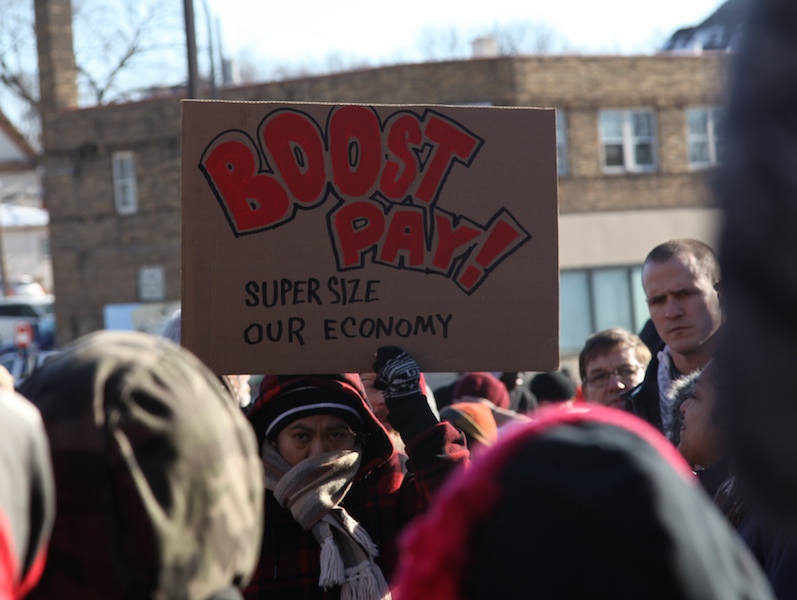
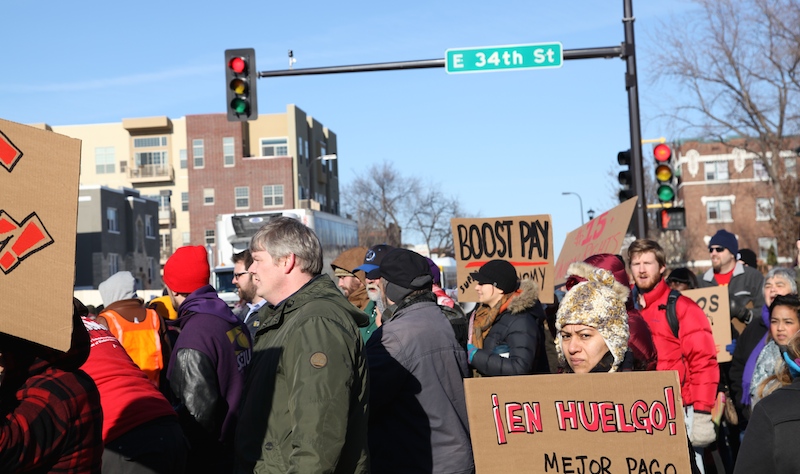
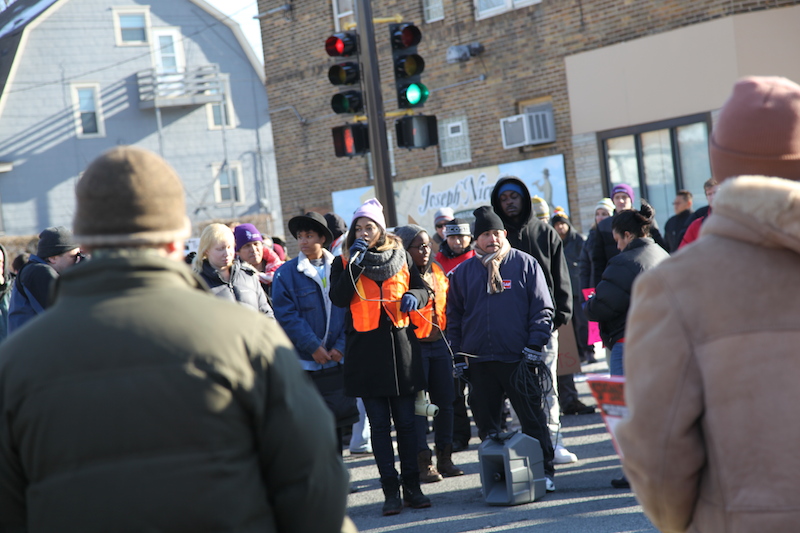
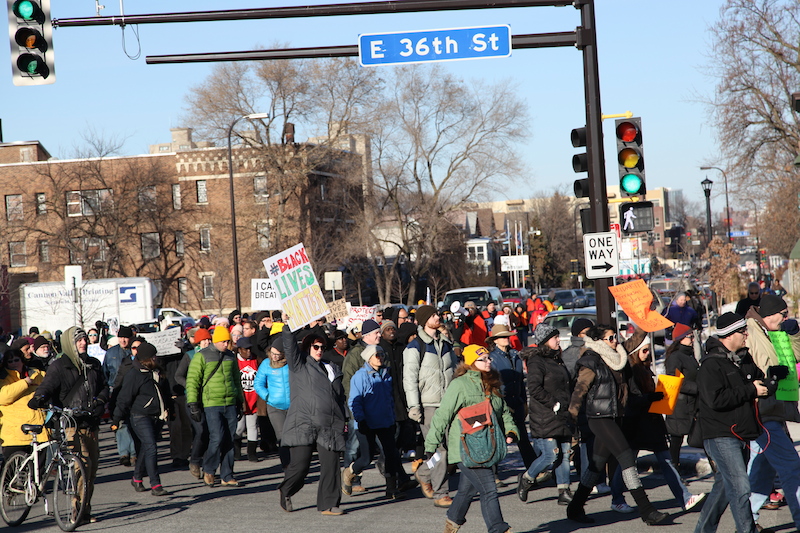
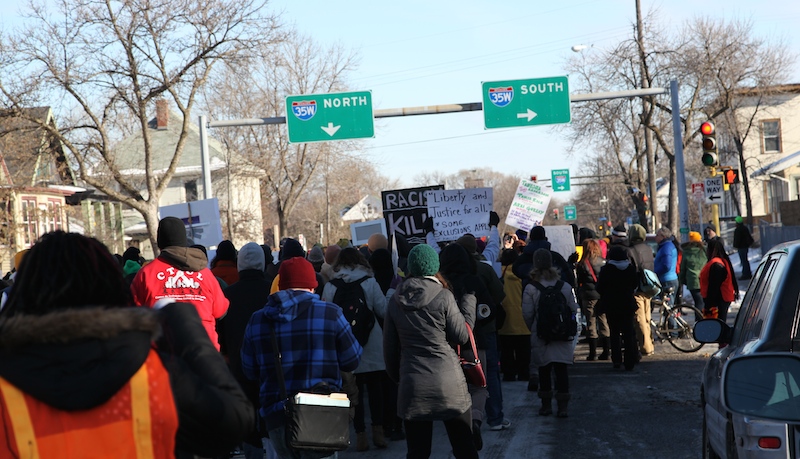
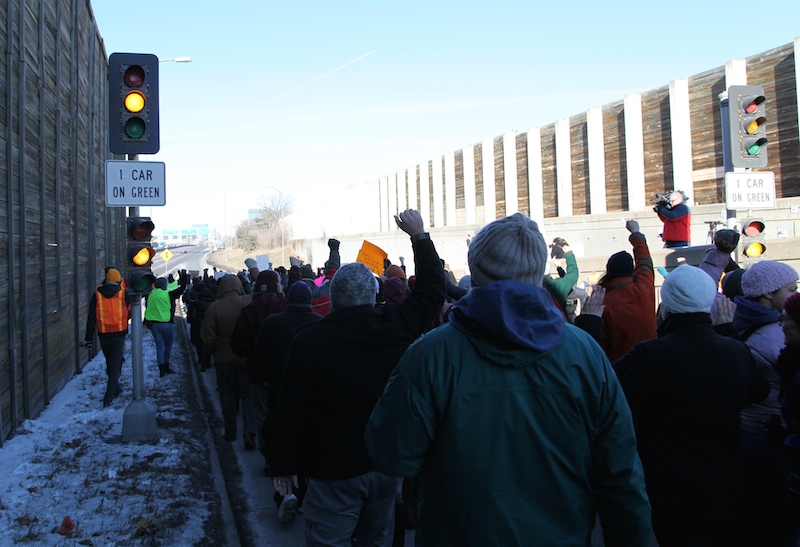
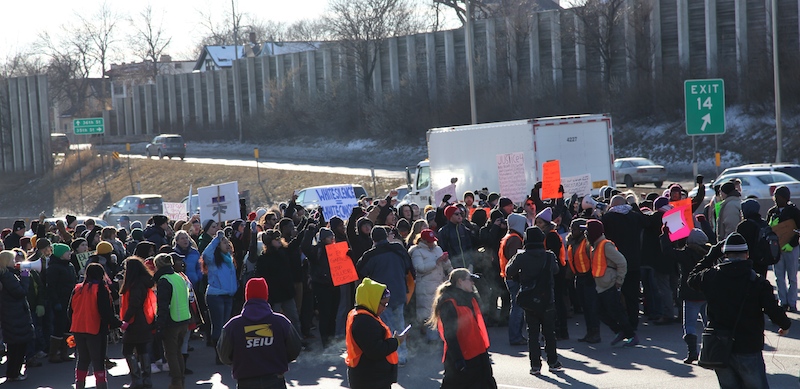
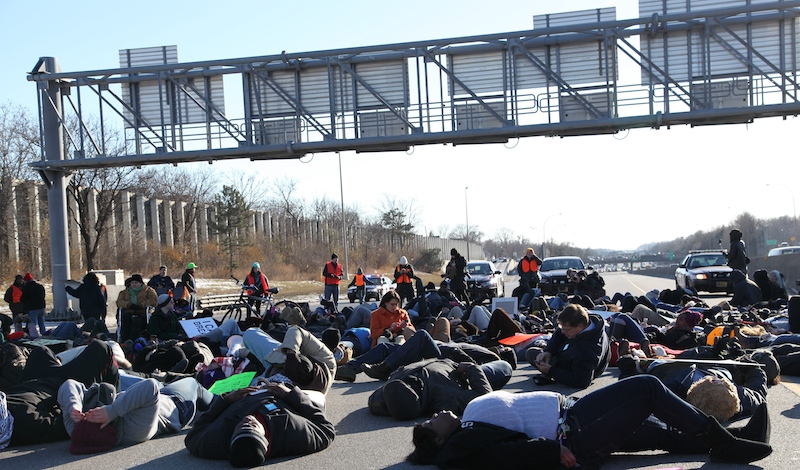
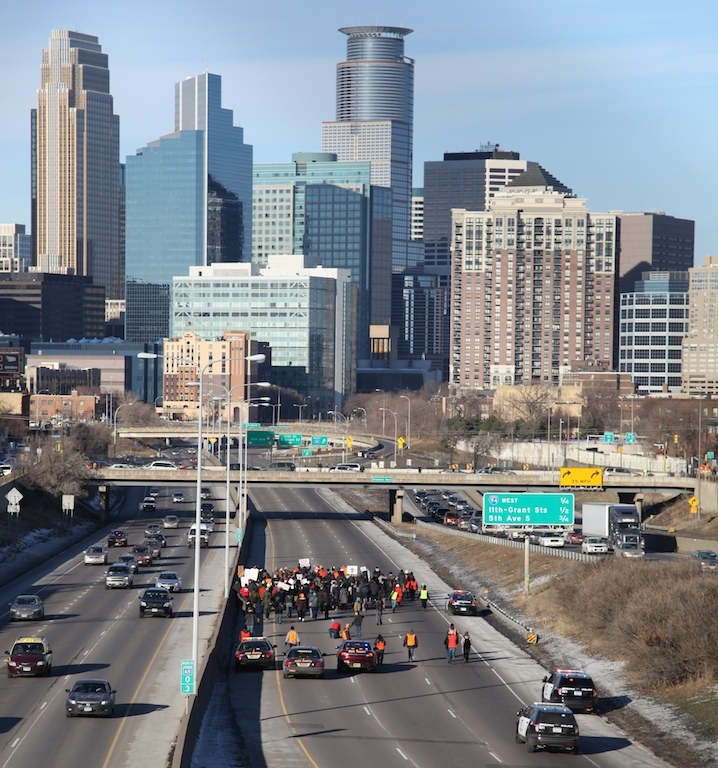
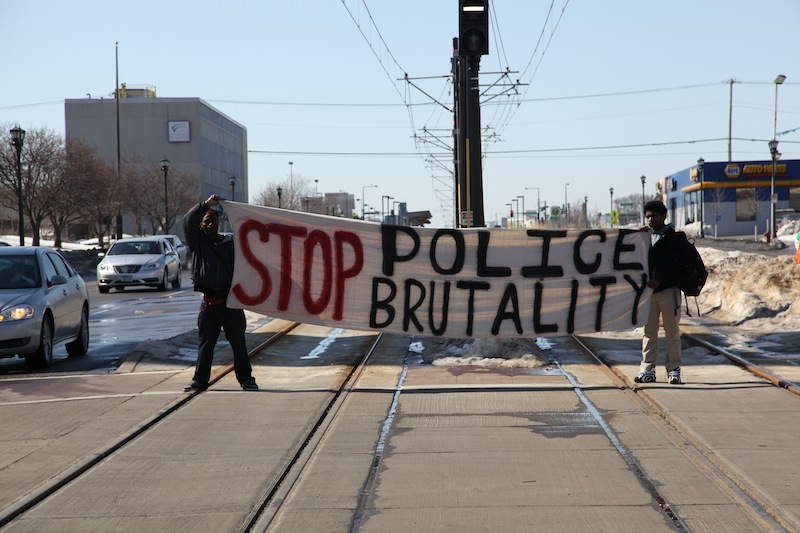
On December 4th, more than 100 demonstrators gathered outside Burger King at the intersection of 34th Street and Nicollet Avenue in South Minneapolis to make their voices heard on two prominent social issues–the struggle for better wages and working conditions for fast food employees and the unjust deaths of people of color at the hands of police across the U.S. The group marched onto I-35W via the 36th Street on-ramp and blocked traffic on the northbound lanes for well over an hour as they made their way downtown toward Minneapolis City Hall.
Community organizer Mica Grimm addressed the crowd of protesters.
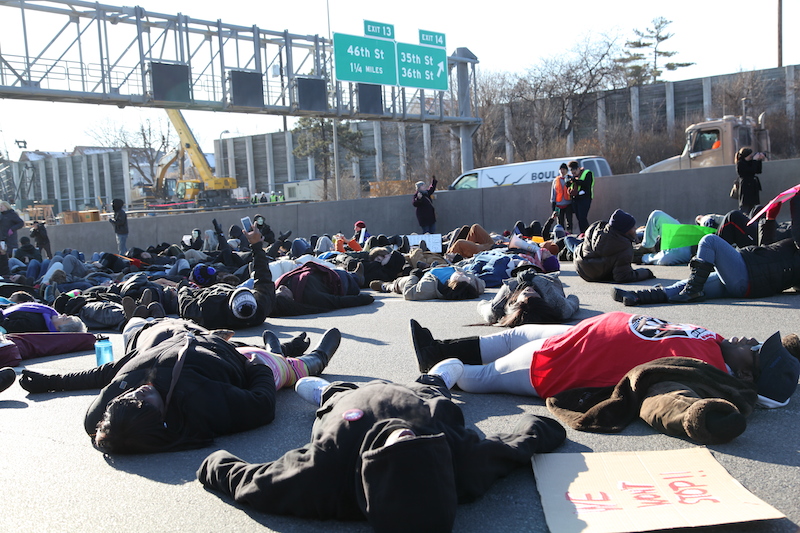
Protesters performed a ‘die-in’ shortly after making their way onto I-35W.
Defying police orders to exit the interstate at the Lake Street ramp, the group continued marching toward downtown until they reached Minneapolis City Hall.
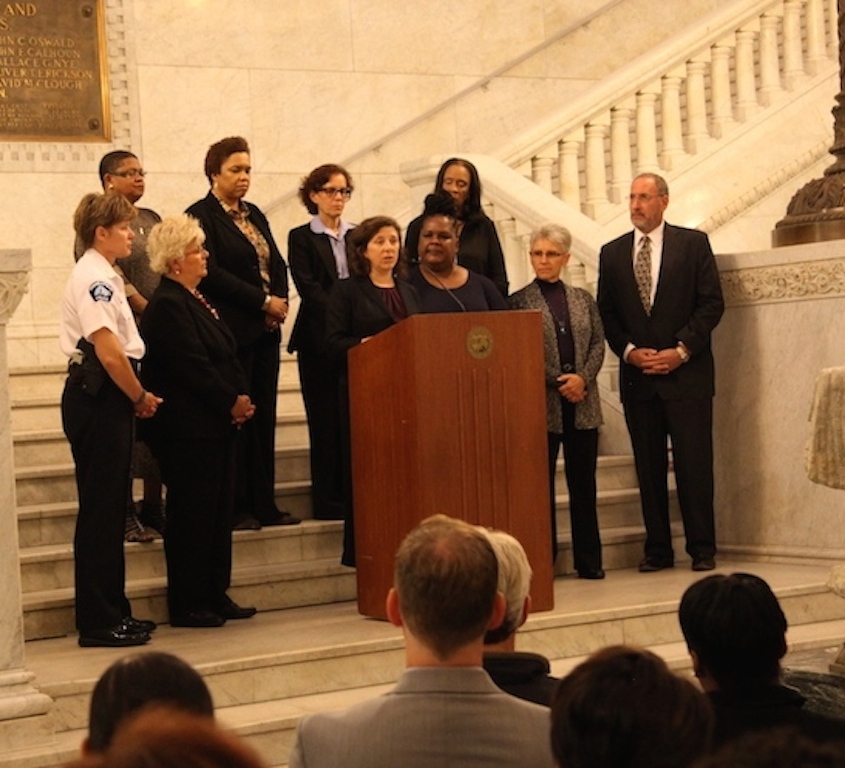
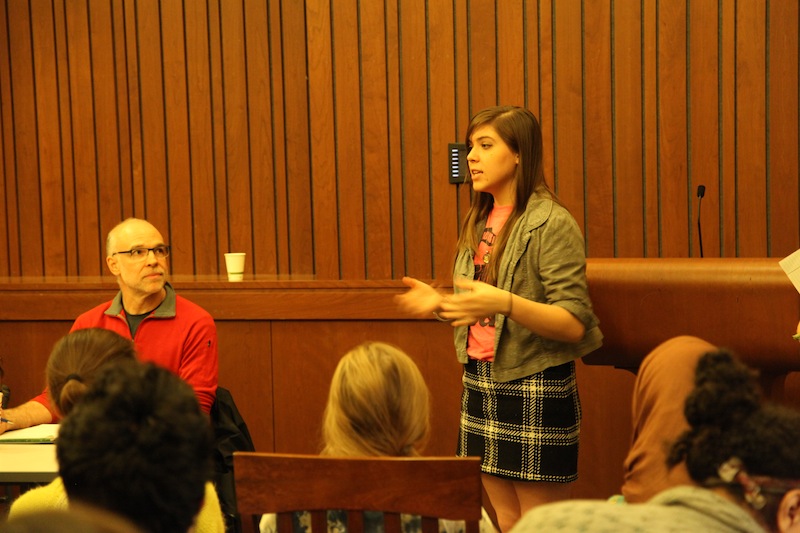
Dr. Lauren Martin presented her findings at Minneapolis City Hall on Sept. 10.
The number of juvenile sex trafficking investigations conducted by the Minneapolis Police Department has tripled in recent years, from 8 cases in 2008 to 24 cases in 2013. A press conference was held at City Hall in connection with a new study of the ‘business’ of juvenile sex trafficking in Minneapolis. The study is the work of Lauren Martin, director of research for the University of Minnesota Urban Research and Outreach-Engagement Center (UROC), and Alexandra Pierce, president of Othayonih Research.
“The findings offer a birds-eye view of the ‘who, where, and how’ of juvenile sex trafficking in Minneapolis,” Martin said. “As we pulled the lens back away from the areas particularly affected by this, it became clear that this is a problem involving people of every background, in communities both in and around Minneapolis.”
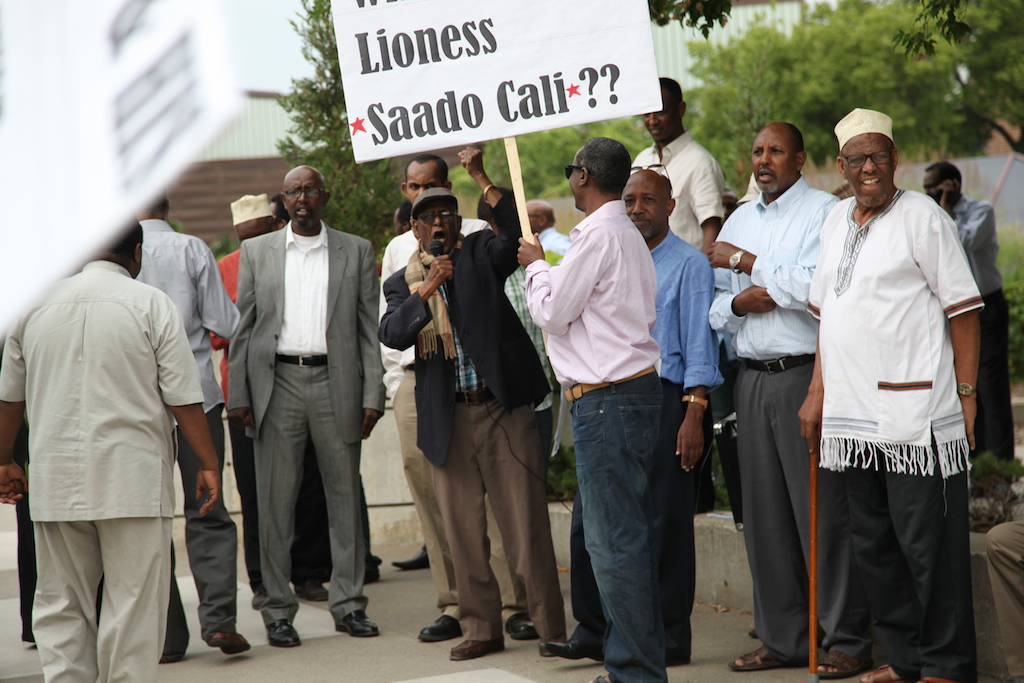
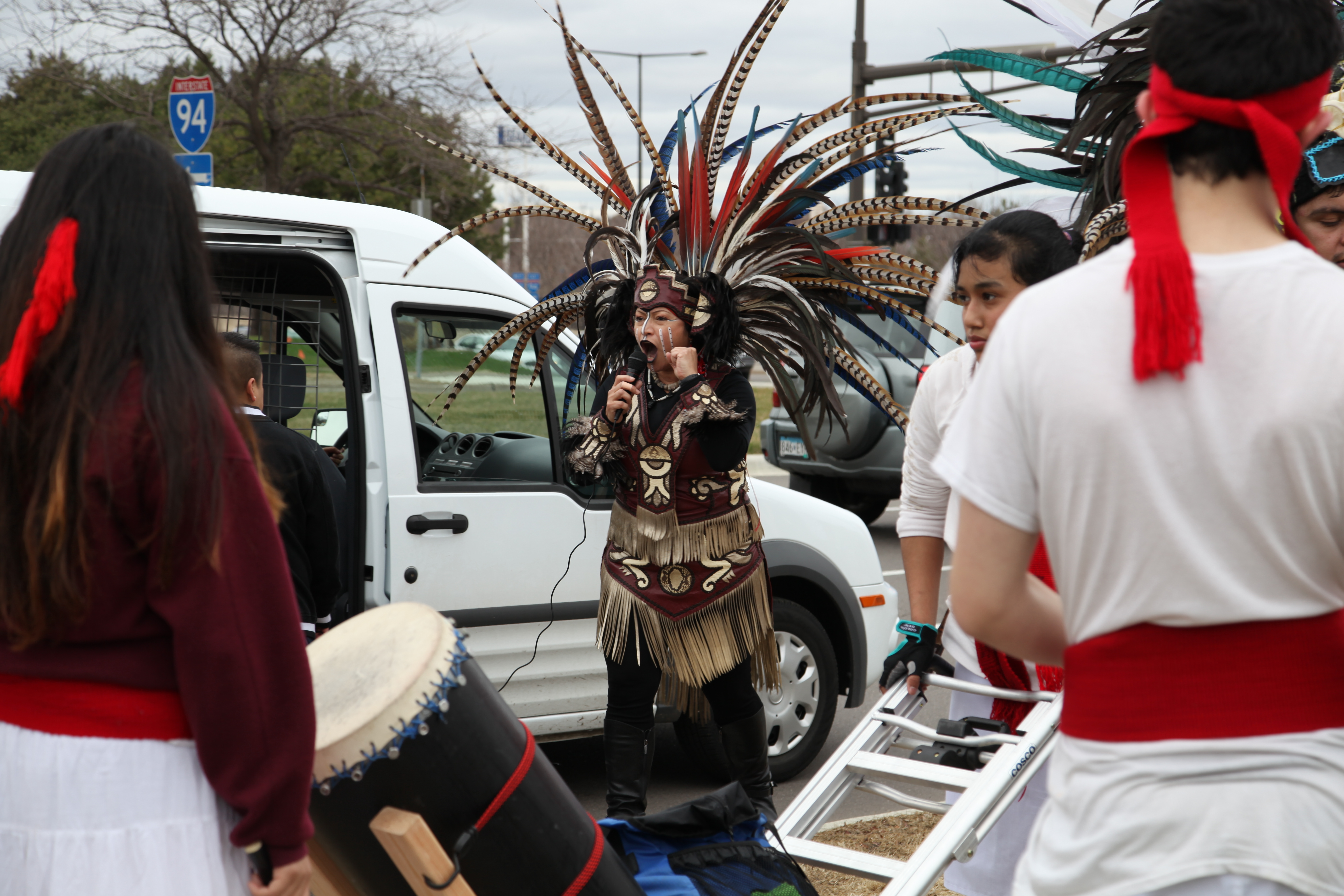
It was completely dark by the time Somali president Hassan Sheikh Mohamud arrived at Northrop Auditorium on the University of Minnesota campus on Aug. 9. But the lack of light didn’t stop protesters, many of whom had been demonstrating for hours, from rushing to the curb and chanting “Down, Hassan, down!” as the president arrived.
President Mohamud’s visit to the Twin Cities is part of his attempt to build relationships with the strong Somali population in Minnesota, but his reception was met with mixed feelings. More than 100 protesters showed up among the several hundred attendees at the event, attacking the president for his current policies, which they say lack adequate security improvements and fail to keep promises.
Minneapolis has a Police Conduct Oversight Commission tasked with working to improve the relationship between the Minneapolis Police Department and city residents.
The group held its first community listening session on June 14th.
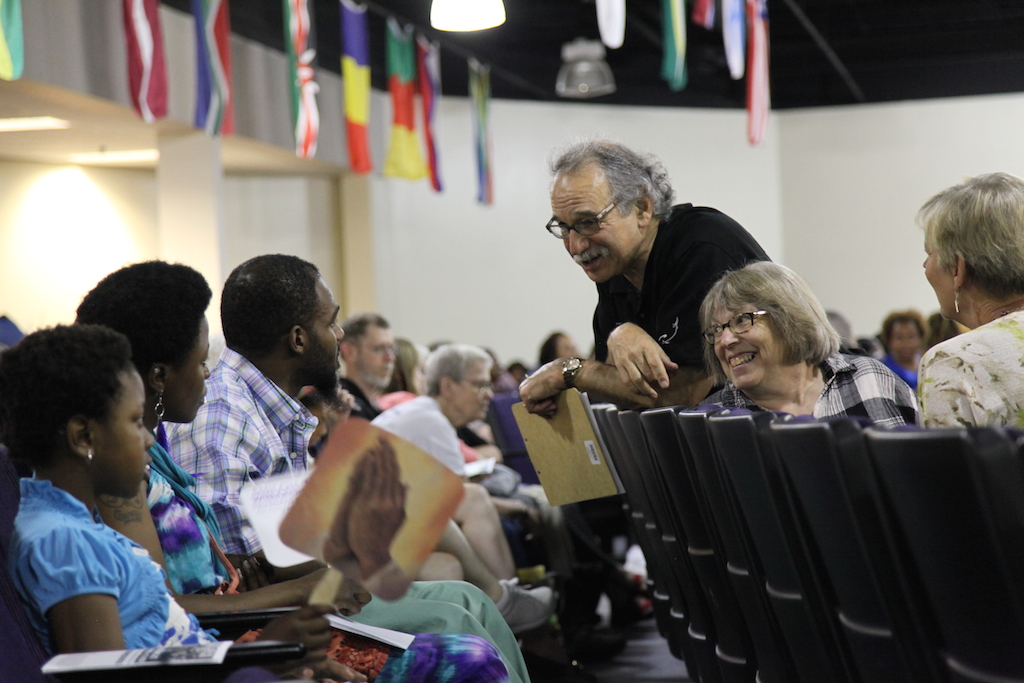
Fifty years after the Freedom Summer work to defend Voting Rights, and 49 years after the passage fo the Voting Rights Act, threats to voting are emerging across the country. An interfaith group, including veterans of the 1960s civil rights struggle, convened June 22 at Shiloh Temple International Ministries in North Minneapolis. They commemorated the Freedom Summer anniversary of the deaths of James Chaney, Andrew Goodman and Mickey Schwerner and issued a call to action to the U.S. Congress to reinstate key provisions of the Voting Rights Act.
The event featured Dr. Josie Johnson, civil rights leader and a participant in the Freedom Summer of 1964 as the keynote speaker, along with Imam Abdisalam Adam (Dar Al-Hijarah Mosque), Rabbi David Wirtschafter (Jay Phillips Center), Rabbi Esther Adler (Mt. Zion Temple) and Bishop Richard Howell (Shiloh Temple International Ministries), and a representative from Minnesota Congressional Representative Keith Ellison’s office.
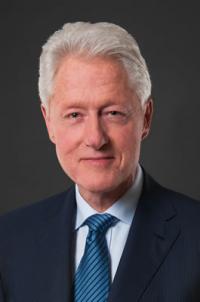
On June 9th, President Bill Clinton accepted the Dean’s Award for Public Leadership from the Humphrey School of Public Affairs at the University of Minnesota. Clinton’s appearance was part of the Humphrey School’s yearlong series of events to commemorate the 50th anniversary of the Civil Rights Act of 1964.
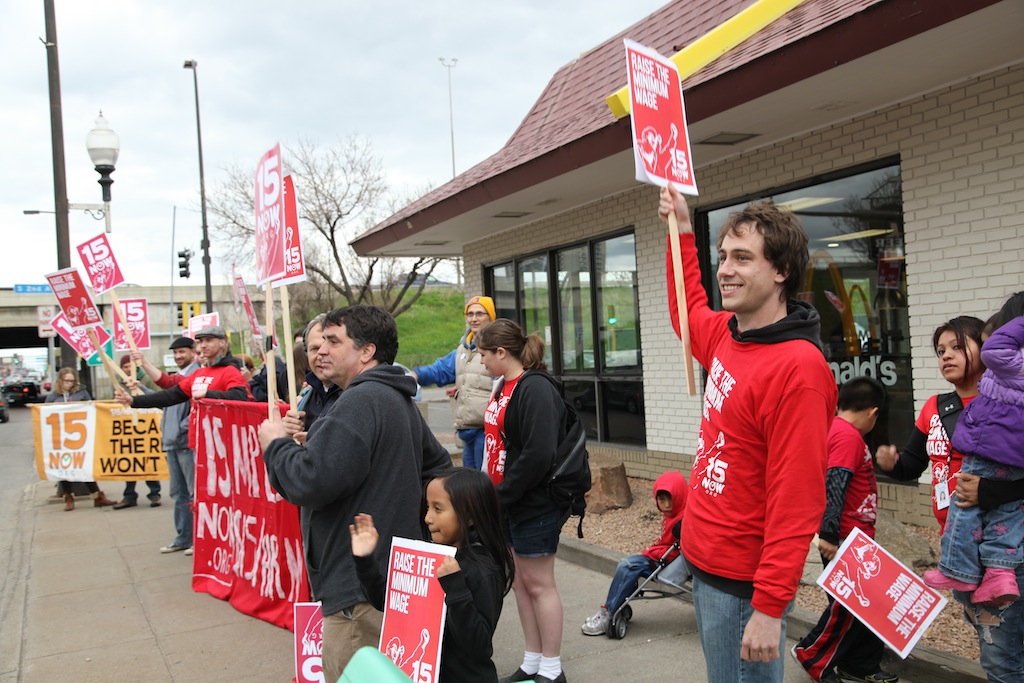
A group of fast food workers and activists gathered outside the McDonald’s at the corner of 2nd Avenue and Lake Street in Minneapolis on Thursday, May 15 as part of a nationwide event to raise awareness about low wages and workers’ rights in fast food establishments across the country.
The crowd gathered outside as members from the McDonald’s corporate office looked on from inside the restaurant.
Community organization Mesa Latina and supporters from more than 30 local groups assembled outside the Governor’s Mansion in St. Paul to rally support for immigration reform, worker’s rights, and MN bill HF348, also known as the ‘Driver’s License Bill,’ which would allow individuals in Minnesota to apply for a driver’s license regardless of their current immigration status.
Nick Faber, St. Paul Federation of Teachers and Leewana Thomas, Mac student and organizer with United Students Against Sweatshops (USAS).
Every year thousands of students from more than 800 universities and colleges across the U.S. apply to become Teach For America (TFA) corps members, hoping to gain teaching experience with youth in low-income schools. The TFA Truth Tour told stories of under-prepared recruits, and sweetheart contracts between schools and TFA.
“I really believe that if more college students actually knew what TFA was doing at the policy level, they would not be applying to be a corps member. They would never want to be a part of this organization,” said Neja Singhal, who relocated with the program to the Rio Grande Valley in southern Texas after her graduation from the University of Maryland.
Twin Cities youth and their adult allies received supportive honking and shouting from drivers as they gathered with banners at the intersection of University Avenue and Lexington Parkway in St. Paul on March 13. Their aim: to raise awareness about discipline concerns in schools and to demonstrate against the school-to-prison pipeline.
The group of about 30 advocates marched down University Avenue to Gordon Parks High School where they were joined by additional students and supporters. Standing in front of Gordon Parks High School, some students took turns sharing personal experiences with disciplinary action in schools.

 Shoestringer